PAGESCONTACT
Overhead Crane Prices 2026: Complete Cost & Buying Guide
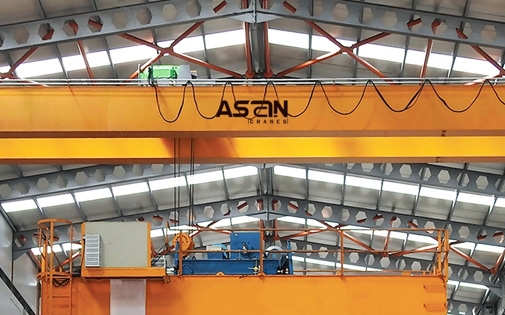
If you are planning to purchase an overhead crane in 2026, one of the first questions is simple: How much does an overhead crane cost?
The answer is not a single fixed number. Overhead crane prices in 2026 can range from a few thousand US dollars for relatively small, standard configurations to well over $100,000 for high-capacity, heavy-duty or highly customized industrial crane systems. Large-span, high-capacity and automated cranes can cost significantly more depending on engineering requirements, components, installation and site conditions. Current industry price references show similarly wide ranges, confirming that crane cost is highly configuration-dependent.
For international buyers, the most important point is that an overhead crane is not a standard off-the-shelf product. The final price depends on the lifting capacity, span, lifting height, duty cycle, crane type, operating environment, electrical equipment, automation level, applicable standards, installation requirements and delivery conditions.
This 2026 guide explains overhead crane prices, the main cost factors, typical price ranges, single girder versus double girder systems, additional project costs and what buyers should consider before requesting a quotation.
Overhead Crane Price 2026: How Much Does an Overhead Crane Cost?
As a general 2026 market reference, overhead crane prices can be grouped into several broad categories.
| Overhead Crane Type | Typical Capacity | Indicative 2026 Price Range* |
|---|---|---|
| Light-duty single girder crane | 1–5 tons | $3,000–$15,000+ |
| Standard single girder crane | 5–20 tons | $5,000–$30,000+ |
| Double girder overhead crane | 10–50 tons | $15,000–$100,000+ |
| Heavy-duty industrial crane | 30–100+ tons | $50,000–$150,000+ |
| Large/custom process crane | 50–500+ tons | Project-specific |
*These are indicative market ranges rather than fixed Asan Cranes quotations. Actual prices can vary substantially according to span, lifting height, duty class, components, steel prices, automation, installation, shipping and project-specific requirements.
Published 2026 supplier references show, for example, single-girder cranes in the low-thousands to tens-of-thousands of dollars, while double-girder and heavy-duty systems can reach tens or hundreds of thousands of dollars. Some published price tables also explicitly state that their figures are reference prices and vary according to configuration and market conditions.
Therefore, asking only “What is the price of a 10-ton overhead crane?” is not enough to obtain a meaningful quotation.
A 10-ton crane with a short span and moderate duty cycle can have a very different price from a 10-ton crane with a long span, high lifting height, intensive duty cycle, automated positioning and premium electrical components.
What Determines Overhead Crane Prices in 2026?
The price of an overhead crane is determined by the complete engineering specification rather than lifting capacity alone.
1. Lifting Capacity
Capacity is one of the most important factors affecting crane cost.
A crane designed to lift 5 tons requires considerably less structural steel, mechanical power and braking capacity than a crane designed for 50 or 100 tons.
Typical industrial applications can include:
- 1–5 ton cranes for workshops and maintenance
- 5–20 ton cranes for manufacturing facilities
- 20–50 ton cranes for heavy industrial applications
- 50–100+ ton cranes for steel, energy and heavy fabrication
- Higher capacities for specialized process and heavy-lift applications
However, capacity should never be considered independently from the load spectrum and duty cycle.
2. Single Girder vs. Double Girder Design
The structural configuration has a major influence on the price.
A single girder overhead crane uses one main bridge girder and is generally an economical choice for light and medium-duty applications.
A double girder overhead crane uses two main bridge girders and can provide greater structural capacity, rigidity and flexibility for heavy-duty applications.
As a result, double girder cranes generally cost more than comparable single girder cranes. Current industry references commonly show substantial price differences between the two configurations, although the actual percentage depends on capacity, span, hoist arrangement and other specifications.
3. Crane Span
The span is the horizontal distance between the crane runways.
A longer span generally requires a larger or more heavily engineered bridge structure. It can also affect wheel loads, end carriage design, structural deflection and the required runway system.
For this reason, two cranes with the same lifting capacity can have significantly different prices if their spans are different.
4. Lifting Height
The required hook height also affects the crane price.
A higher lifting height may require:
- Longer wire rope
- Larger rope drum
- Different hoist configuration
- Additional structural considerations
- Increased installation requirements
The available building height and required headroom should therefore be established before requesting a quotation.
5. Duty Class and Operating Frequency
A crane used for occasional maintenance lifting does not require the same engineering approach as a crane operating continuously in a steel mill.
Important parameters include:
- Lifts per hour
- Working hours per day
- Number of shifts
- Working days per year
- Average load
- Maximum load
- Hoisting frequency
- Trolley travel frequency
- Bridge travel frequency
Duty classification is therefore a critical component of the crane specification.
A higher-duty crane generally requires more robust motors, brakes, gearboxes, wheels, bearings, electrical equipment and structural design.
6. Operating Environment
The working environment can significantly affect overhead crane cost.
Special engineering may be required for:
- High-temperature environments
- Outdoor operation
- High humidity
- Corrosive atmospheres
- Heavy dust
- Foundries and steel mills
- Chemical plants
- Hazardous areas
- Low-temperature environments
- Clean manufacturing environments
For example, an explosion-protected crane requires different electrical and safety equipment from a conventional workshop crane.
7. Hoist Type and Mechanical Components
The hoisting system is another major cost component.
Depending on the application, a crane may use:
- Electric wire rope hoists
- Electric chain hoists
- Open winch hoists
- Heavy-duty trolley hoists
- Dual-hoist arrangements
- Auxiliary hoists
- Specialized lifting attachments
Gearboxes, motors, brakes, ropes, drums and other mechanical components also influence the final price.
8. Automation and Control Systems
Automation can increase the initial purchase price but may provide significant operational benefits for repetitive or high-volume applications.
Possible options include:
- Variable frequency drives (VFD)
- Wireless remote control
- PLC-based control
- Anti-sway systems
- Automatic positioning
- Load monitoring
- Collision avoidance
- Zone control
- Remote diagnostics
- Condition monitoring
- Semi-automatic operation
- Fully automated crane operation
The right automation level depends on the production process and operational requirements.
Single Girder Overhead Crane Price 2026
Single girder cranes are among the most common overhead crane configurations.
They are generally suitable for workshops, warehouses, maintenance areas and manufacturing facilities where the load and duty requirements are moderate.
As a broad 2026 market reference, smaller single girder cranes may start in the low-thousands of dollars, while larger capacities, longer spans and more demanding specifications can push prices into the $20,000–$30,000+ range. Published supplier references show wide variations because the underlying specifications differ significantly.
The price of a single girder overhead crane is primarily influenced by:
- Capacity
- Span
- Lifting height
- Hoist type
- Duty classification
- Travel speed
- Electrical components
- Control system
- Runway requirements
- Installation and shipping
Double Girder Overhead Crane Price 2026
Double girder overhead cranes are designed for applications requiring greater capacity, structural rigidity or more demanding operating conditions.
They are commonly used in:
- Steel plants
- Foundries
- Heavy manufacturing
- Shipyards
- Power plants
- Heavy machinery factories
- Industrial maintenance facilities
- Large production plants
Indicative 2026 market references place many double-girder systems in the tens of thousands of dollars, with larger and more complex systems reaching or exceeding $100,000. Published examples include double-girder configurations ranging from approximately $15,000 to over $100,000 depending on capacity and specification.
For large industrial cranes, however, the price should always be calculated from a project-specific technical specification.
Overhead Crane Price by Capacity
Capacity is useful as a starting point, but it should not be used as the only pricing parameter.
A simplified 2026 reference can be considered as follows:
| Capacity | Typical Application | Indicative Price Level |
|---|---|---|
| 1–3 tons | Workshops, maintenance | Low |
| 5 tons | Manufacturing, warehouses | Low–Medium |
| 10 tons | Industrial production | Medium |
| 16–20 tons | Heavy manufacturing | Medium–High |
| 30–50 tons | Heavy industry | High |
| 50–100+ tons | Steel, energy, heavy lifting | Very High |
| 100+ tons | Specialized industrial/process applications | Project-specific |
These categories are intentionally indicative. Actual market quotations vary considerably according to configuration. Current supplier data demonstrates that even cranes with identical rated capacities can have very different prices when span, lifting height, duty and equipment configuration change.
What Is Included in an Overhead Crane Price?
When comparing quotations, it is important to understand exactly what the quoted price includes.
A crane quotation may include some or all of the following:
- Main bridge structure
- End carriages
- Hoist
- Trolley
- Electric motors
- Gearboxes
- Brakes
- Control panel
- Pendant control
- Radio remote control
- Festoon or conductor-bar system
- Limit switches
- Load limiter
- Electrical cables
- Painting
- Testing
- Technical documentation
However, some project costs may be quoted separately.
These can include:
- Runway beams
- Runway rails
- Building modifications
- Installation
- Commissioning
- Local electrical works
- Civil works
- Customs duties
- Sea freight
- Inland transportation
- Insurance
- Local taxes
- Operator training
- Spare parts
This distinction is particularly important for international buyers.
Overhead Crane Shipping and Installation Costs
The purchase price of the crane is not necessarily the same as the total project cost.
For an international project, the buyer should consider the complete landed cost:
Crane equipment + packaging + inland transport + international freight + insurance + customs/taxes + installation + commissioning + local works = total project cost
Shipping costs can vary according to crane dimensions, weight, destination port, Incoterms, packaging requirements and transportation method.
Installation can also represent a significant additional cost, particularly for large cranes requiring specialized lifting equipment or modifications to the existing building.
Therefore, comparing one supplier's FOB price with another supplier's CIF, CFR or DDP price without understanding the Incoterms can produce misleading conclusions.
New vs. Used Overhead Crane: Which Is More Cost-Effective?
Used overhead cranes can have a lower initial purchase price, but the cheapest equipment is not necessarily the lowest-cost solution over its operating life.
Before purchasing a used crane, buyers should investigate:
- Original manufacturing date
- Previous duty cycle
- Inspection records
- Structural condition
- Hoist condition
- Wire rope condition
- Brake condition
- Motor and gearbox condition
- Electrical system
- Availability of spare parts
- Compliance with current local requirements
- Compatibility with the existing runway
A new crane can provide advantages in terms of engineering customization, documentation, warranty, component selection and long-term support.
For a critical production application, lifecycle cost should generally be considered alongside purchase price.
How to Get an Accurate Overhead Crane Price in 2026
The fastest way to obtain an accurate quotation is to provide the manufacturer with a clear technical specification.
At minimum, an RFQ should include:
Crane Capacity
For example: 5 tons, 10 tons, 20 tons or 50 tons.
Span
The distance between the runway rails.
Lifting Height
The required hook lifting height.
Building Dimensions
Where available, provide building width, height, runway elevation and available headroom.
Duty Cycle
Provide estimated lifts per hour, operating hours per day and number of shifts.
Operating Environment
Specify indoor/outdoor use, temperature, humidity, dust, corrosive substances and hazardous-area requirements.
Travel Speeds
Specify required hoisting, trolley and bridge travel speeds.
Control System
Indicate whether pendant, radio remote, cabin, semi-automatic or automatic control is required.
Applicable Standards
Specify the project country and any customer or industry-specific standards that must be followed.
With these parameters, a crane manufacturer can develop a much more meaningful technical and commercial quotation than a simple capacity-only request.
How to Compare Overhead Crane Quotations
The lowest quotation is not automatically the best quotation.
When comparing suppliers, check whether all offers include equivalent specifications.
Compare:
- Crane capacity
- Span
- Lifting height
- Duty classification
- Hoist type
- Motor brand and rating
- Gearbox specification
- Brake system
- Electrical components
- Control system
- Safety devices
- Runway scope
- Testing requirements
- Documentation
- Warranty
- Spare parts
- Installation
- Shipping terms
- Applicable standards
- After-sales support
A quotation with a lower purchase price may become more expensive if important components or services are excluded.
Overhead Crane Manufacturer: What Should Buyers Look For?
Selecting an overhead crane manufacturer is an important part of the procurement process.
International buyers should evaluate more than price.
A qualified manufacturer should be able to demonstrate capabilities in:
- Crane engineering
- Structural calculations
- Mechanical design
- Electrical engineering
- Automation
- Manufacturing
- Quality control
- Testing
- Installation and commissioning
- Technical documentation
- Spare parts
- After-sales service
The manufacturer should also be able to design the crane according to the standards and regulatory requirements applicable to the destination market.
Overhead Crane Standards and Compliance
The applicable standards depend on the project location and application.
For European projects, crane design may involve the EN 13001 series, together with applicable European machinery legislation and other project-specific requirements.
For U.S. projects, relevant requirements can include OSHA 29 CFR 1910.179 for overhead and gantry cranes, as well as applicable ASME and CMAA specifications.
OSHA's requirements address areas including rated load marking, inspection, brakes, operating practices and other crane safety provisions.
For international projects, the exact compliance requirements should be confirmed during the engineering stage rather than assumed from the crane's country of manufacture.
Why Choose Asan Cranes?
Asan Cranes provides engineered overhead crane solutions for industrial applications where capacity, reliability, safety and long-term operating performance are important.
Rather than treating an overhead crane as a standard product with a fixed price, Asan Cranes can develop the crane specification around the actual requirements of the project.
This approach allows the crane to be evaluated according to:
- Required lifting capacity
- Span and lifting height
- Duty cycle
- Operating environment
- Hoisting and travel speeds
- Control requirements
- Automation level
- Safety requirements
- Applicable international standards
- Installation and commissioning requirements
For international customers, this project-based approach is particularly important because the most cost-effective crane is not necessarily the crane with the lowest initial price. It is the crane that provides the appropriate combination of purchase cost, reliability, maintenance requirements, energy consumption, availability and service life.
Request an Overhead Crane Price in 2026
There is no universal price for an overhead crane.
The most accurate overhead crane price in 2026 can only be determined after the technical requirements of the project are defined.
To request a quotation from Asan Cranes, provide the following information:
- Required lifting capacity
- Crane span
- Lifting height
- Building dimensions
- Duty cycle
- Working hours
- Indoor or outdoor application
- Required speeds
- Control system
- Operating environment
- Destination country
- Applicable standards
- Special lifting or automation requirements
With these details, the crane can be engineered according to the actual application and a more accurate commercial proposal can be prepared.
Frequently Asked Questions About Overhead Crane Prices 2026
How much does an overhead crane cost in 2026?
Overhead crane prices in 2026 can range from several thousand dollars for small standard cranes to more than $100,000 for heavy-duty, high-capacity or highly customized systems. The final price depends on capacity, span, lifting height, duty cycle, crane configuration, components, automation, installation and shipping.
How much is a 5-ton overhead crane?
A 5-ton overhead crane can fall within a broad price range depending on its span, lifting height, duty class and configuration. Current published market references show prices ranging from several thousand dollars to significantly higher amounts for customized configurations.
How much is a 10-ton overhead crane?
A 10-ton overhead crane can range from several thousand dollars to tens of thousands of dollars depending on whether it is a standard single-girder crane or a more complex double-girder or customized system. Published 2026 supplier references demonstrate this wide variation.
How much is a 20-ton overhead crane?
A 20-ton overhead crane typically costs more than a comparable 5- or 10-ton system because of the increased structural, mechanical and lifting requirements. The actual quotation depends on span, lifting height, duty class and equipment configuration.
What is the difference between single girder and double girder crane prices?
Double girder cranes generally cost more because they use a different bridge structure and are typically selected for higher capacities, greater rigidity or more demanding duty requirements. The exact price difference depends on the complete technical specification.
Does crane installation come with the price?
Not necessarily. Installation, commissioning, runway construction, local electrical work, transportation and other site services may be quoted separately. Buyers should always confirm the exact scope of supply.
Are overhead crane prices negotiable?
The final commercial price may depend on the technical configuration, order quantity, delivery terms, component selection, project schedule and commercial conditions. However, reducing the price by removing essential safety or engineering features is not an appropriate way to optimize a critical lifting system.
What information is needed to get an overhead crane quotation?
At minimum, provide the lifting capacity, span, lifting height, duty cycle, operating environment, required speeds, control method and destination country. Additional information about the building and applicable standards will improve quotation accuracy.
Can Asan Cranes manufacture customized overhead cranes?
Yes. Overhead cranes can be engineered around project-specific capacity, dimensions, duty cycle, operating environment, control requirements and automation needs.
Conclusion: Overhead Crane Price Is a Project-Specific Calculation
Searching for “Overhead Crane Prices 2026” is a useful starting point, but a published price range should never be treated as a final quotation.
The actual cost of an overhead crane is determined by the complete engineering specification.
Capacity, span, lifting height, duty cycle, crane type, hoist, electrical components, safety systems, automation, operating environment, installation and logistics can all change the final project cost.
For this reason, international buyers should compare complete technical and commercial scopes, not simply the headline equipment price.
Asan Cranes can evaluate your application and develop a customized overhead crane solution based on the technical and operational requirements of your project.
Professional, powerful and reliable industrial cranes, equipments are our core expertise.
ALL PRODUCTS Contact
 Whatsapp
 Telephone