PAGESCONTACT
Crane Kit for Overhead and Gantry Cranes
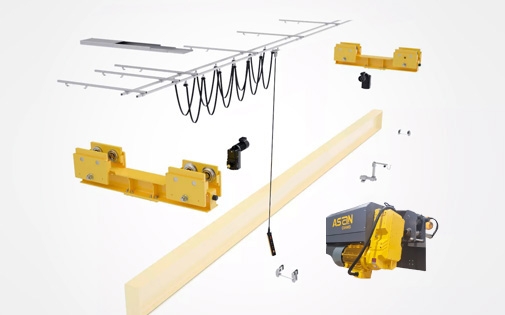
A crane kit is a complete, engineered package of mechanical, electrical and control components used to build an overhead crane, gantry crane, monorail crane or other industrial lifting system.
Asan Cranes provides crane kit solutions for crane manufacturers, steel structure companies and system integrators that prefer to manufacture the crane's main steel structure themselves while sourcing the critical lifting, travelling, electrical and control equipment as a coordinated package.
Depending on the project requirements, an Asan Cranes crane kit can include the hoisting unit, end carriages, travel drives, electrical panel, control system, cable management equipment, power supply systems and safety components.
This approach allows the customer to manufacture or supply the crane's steel structure while integrating the main mechanical and electrical components into a compatible lifting system.
What Is a Crane Kit?
A crane kit is an engineered set of compatible crane components supplied as a coordinated package for the assembly of an industrial lifting system.
Instead of sourcing the hoist, end carriages, travel mechanisms, electrical panel and control equipment separately from different suppliers, a crane manufacturer can obtain these key components as part of one engineered solution.
The exact scope of a crane kit depends on the crane type, lifting capacity, span, lifting height, duty class, operating environment and control requirements.
A typical crane kit may include:
- Hoisting unit
- End carriages / end trucks
- Bridge travel drives
- Electric motors and gearboxes
- Electrical control panel
- Pendant or radio remote control
- Festoon or cable management system
- Conductor bar or power supply system
- Limit switches
- Emergency stop system
- Load protection and other safety equipment
The components are selected according to the technical requirements of the project so that the mechanical, electrical and control systems can work together as an integrated crane solution.
What Is a Crane Kit Used For?
The primary purpose of a crane kit is to provide the key equipment required to build a functional lifting system in an engineered, compatible and installation-ready package.
In conventional crane manufacturing, the hoisting system, travel mechanisms, electrical equipment and control systems may be sourced separately. While this approach can work, it can also create additional coordination requirements related to technical compatibility, delivery schedules, installation and commissioning.
With a crane kit, these components are considered together during the engineering process.
This can provide several practical benefits:
- Improved technical compatibility between components
- Simplified procurement and project coordination
- More controlled installation
- Reduced workload for steel structure manufacturers
- Fewer supplier coordination requirements
- Easier spare parts and technical support management
For companies manufacturing cranes for multiple projects, a standardized crane kit can also provide a scalable and repeatable engineering solution.
What Components Are Included in a Crane Kit?
The components included in a crane kit vary according to the crane configuration and application.
Important factors include:
- Rated lifting capacity
- Crane span
- Lifting height
- Duty classification
- Hoisting and travel speeds
- Operating environment
- Automation requirements
- Applicable technical standards
Depending on the project, an Asan Cranes crane kit may include the following components.
Hoisting Unit
The hoisting unit is one of the most important mechanical components of a crane kit.
Depending on the application, the hoisting system can include:
- Electric motor
- Gearbox
- Rope drum
- Wire rope
- Hook block
- Brake system
- Rope sheaves
- Limit and safety equipment
Hoist selection is not based solely on rated lifting capacity.
The required lifting height, hoisting speed, operating frequency and load spectrum must also be considered when selecting the appropriate hoisting system.
End Carriages and Travel System
End carriages, also known as end trucks, allow the crane bridge to travel along the runway rails.
The travel system can include:
- Travel motors
- Gearboxes
- Crane wheels
- Axles and connection components
- Buffers
- Mechanical connections
The dimensions of the end carriages and the specification of the travel drives depend on factors such as crane capacity, total bridge weight, span, runway arrangement and required travel speed.
Correctly matching the end carriages to the bridge structure is essential for reliable crane operation.
Electrical Control Panel
The electrical system controls the lifting and travelling motions of the crane and provides the required protection and control functions.
Depending on the project, the electrical panel may include:
- Motor drives
- Contactors and protection equipment
- PLC
- Relays
- Circuit breakers and fuses
- Power supplies
- Safety circuits
- Control components
For projects requiring advanced automation, the electrical architecture can also be configured for monitoring, diagnostics and automated crane functions.
Cable Management and Power Supply System
A suitable cable management system is required to safely transmit power and control signals while the crane is moving.
Depending on the project, the system may use:
- Festoon systems
- Cable trolleys
- Cable carriers
- Power supply lines
- Conductor bar systems
The appropriate solution depends on crane travel distance, operating environment, cable type and the electrical infrastructure of the facility.
Crane Control System
Crane kits can be configured with different control methods according to the application.
Possible control options include:
- Pendant control
- Radio remote control
- Operator cabin control
- PLC-based control
- Semi-automatic control
- Automatic crane control
The control method should be selected according to the operator's working position, visibility, production process, safety requirements and desired automation level.
Limit Switches and Safety Systems
The crane's safety architecture should be designed according to the project specifications, risk assessment and applicable standards.
Depending on the application, the crane kit may incorporate:
- Upper and lower hoist limits
- Travel limit switches
- Emergency stop systems
- Overload protection
- Travel limitation systems
- Collision avoidance systems
- Audible and visual warning devices
- Safety relays
The exact safety configuration should be determined according to the crane design and the requirements of the destination market and application.
What Types of Cranes Can Use a Crane Kit?
Crane kits can be developed for different industrial lifting configurations.
Overhead Crane Kit
An overhead crane kit is a complete equipment package designed for the construction or assembly of an overhead bridge crane.
The customer can manufacture the bridge structure independently while sourcing the hoisting unit, end carriages, travel systems and electrical equipment as a coordinated kit.
This approach can be particularly useful for steel structure manufacturers and crane builders that have their own fabrication capabilities.
Gantry Crane Kit
A gantry crane includes a bridge structure supported by legs and a travelling system that moves along ground-level rails or another suitable runway arrangement.
A gantry crane kit can bring together the lifting and travelling equipment required for the project.
For outdoor applications such as industrial yards, factory areas, heavy fabrication facilities and material storage sites, the kit can be configured according to environmental and operational requirements.
Monorail Crane and Lifting Systems
In monorail applications, the hoisting and travel mechanisms are configured to move along a defined track.
Monorail lifting systems can be used in production lines, assembly areas and applications where loads need to follow a predetermined route.
A suitable crane kit can be developed according to the load, travel path, lifting height, speed and operating conditions.
Advantages of Using a Crane Kit
A crane kit can provide important operational and procurement advantages, particularly for crane manufacturers, steel structure companies and system integrators.
1. Compatible Components
Because the main components are selected as part of the same engineering process, potential compatibility issues between independently sourced equipment can be reduced.
2. Easier Installation
Planning the mechanical and electrical equipment as one system can make the installation process more organized and predictable.
Once the steel structure is ready, the crane kit components can be installed and electrically connected according to the project installation plan.
3. Simplified Procurement
Sourcing the hoisting system, end carriages, electrical equipment and control system within one project package can simplify purchasing and logistics.
Instead of managing multiple technical suppliers, the customer can coordinate the main crane equipment through a single engineering partner.
4. Reduced Project Lead Time
A pre-engineered equipment package can reduce the time required to identify individual components and verify their compatibility.
This can be particularly valuable for crane manufacturers working on multiple projects with similar technical requirements.
5. Engineering Support
A crane kit is not simply a collection of components.
Selecting the correct equipment for the application is an important part of the engineering process.
Parameters such as capacity, duty class, lifting height, span, operating speeds and environmental conditions should be evaluated before the components are selected.
6. Easier Maintenance and Spare Parts Management
The use of standardized and coordinated components can simplify future maintenance and spare parts management.
For industrial facilities where crane availability is important, having a clear equipment configuration and defined component list can also support more efficient maintenance planning.
How to Select the Right Crane Kit
Selecting a crane kit based only on lifting capacity is not sufficient.
The complete operating requirements should be evaluated before choosing the equipment.
Lifting Capacity
The first parameter is the maximum load that the crane is expected to lift.
For example, a 5-ton crane and a 20-ton crane require significantly different hoisting systems, motor ratings, braking systems and structural requirements.
The rated capacity should therefore be defined before the crane kit is specified.
Lifting Height
The required hook height affects the selection of the hoisting unit, rope length, drum arrangement and other components.
The maximum and minimum hook positions should be clearly established during the engineering stage.
Crane Span
The crane span is an important parameter when sizing the bridge, end carriages and travel system.
As span increases, the structural requirements of the bridge, wheel loads and travelling equipment can also change.
Duty Class and Operating Frequency
How many hours will the crane operate each day?
How many lifting cycles will it perform?
How many operating days are expected each year?
These questions are important when selecting the hoisting and travel systems.
A maintenance crane used occasionally should not necessarily be designed with the same equipment configuration as a process crane operating continuously in a production line.
Operating Environment
The working environment must also be considered when specifying a crane kit.
Important conditions may include:
- Indoor or outdoor operation
- High temperatures
- Dust
- Humidity
- Chemical exposure
- Corrosion
- Low temperatures
- Potentially explosive atmospheres
These conditions can affect motor protection, electrical enclosures, coatings, cable selection and other equipment requirements.
Electrical and Automation Requirements
A basic pendant control may be sufficient for some applications, while others may require radio remote control, VFDs, PLC-based control, automatic positioning or more advanced automation functions.
The electrical architecture should therefore be evaluated not only for the current application but, where practical, for future operational requirements as well.
How Is the Crane Kit Price Determined?
There is no single fixed crane kit price.
The final price is calculated according to the technical specification and scope of supply for each project.
The main factors affecting crane kit cost include:
- Lifting capacity
- Lifting height
- Crane span
- Duty class
- Hoisting speed
- Bridge travel speed
- Hoisting unit type
- End carriage specification
- Motor and gearbox selection
- Electrical panel
- Inverter / VFD
- Control system
- Festoon or power supply system
- Safety equipment
- Automation level
- Operating environment
- Special engineering requirements
For this reason, a generic crane kit price found online should not be considered a reliable project quotation without knowing the technical specification.
Asan Cranes evaluates the project requirements, determines the appropriate equipment configuration and prepares a technical and commercial proposal based on the application.
What Is the Difference Between a Crane Kit and a Complete Crane?
The main difference between a crane kit and a complete crane is the scope of supply.
With a complete crane, the manufacturer can supply the entire system, including the bridge or gantry steel structure, mechanical equipment, electrical systems and controls.
With a crane kit, the customer or business partner can manufacture the main steel structure independently while sourcing the critical lifting, travelling, electrical and control equipment as an integrated package.
For example, a steel structure company can manufacture its own bridge girders while purchasing the following equipment from Asan Cranes:
- Hoisting unit
- End carriages
- Travel motors
- Electrical panel
- Control system
- Power supply equipment
- Safety equipment
This model provides a flexible solution, particularly for crane manufacturers, steel structure companies and system integrators.
Where Are Crane Kits Used?
Crane kits can be used across a wide range of industrial sectors and lifting applications.
Typical applications include:
- Steel structure and fabrication workshops
- Machinery manufacturing plants
- Automotive factories
- Iron and steel plants
- Metal processing and foundry facilities
- Shipyards
- Power plants
- Warehouses and logistics facilities
- Heavy machinery manufacturing
- Maintenance and assembly facilities
- Industrial production lines
Depending on the application, the crane kit can be based on a standard configuration or engineered specifically for the project.
How to Choose a Crane Kit Manufacturer
When choosing a crane kit manufacturer, price should not be the only consideration.
The manufacturer's engineering capabilities, product quality and technical support are equally important.
International buyers should evaluate factors such as:
- Experience in the crane industry
- Engineering and design capability
- Expertise in hoisting and travel systems
- Electrical and automation capabilities
- Quality control processes
- Manufacturing according to applicable standards
- Technical documentation
- Spare parts support
- After-sales service
- Ability to develop project-specific solutions
A crane kit is not simply a collection of individual components. The hoisting, travelling, electrical and control systems must work together as one integrated lifting system.
Why Choose Asan Cranes for Crane Kits?
Asan Cranes combines its engineering experience in industrial lifting systems with project-based crane kit solutions for different capacities and applications.
The company's approach is not simply to supply individual components. Instead, the objective is to create a coordinated crane equipment package in which the main mechanical, electrical and control components are designed to work together.
Depending on project requirements, the crane kit can include:
- Hoisting unit
- End carriages
- Travel systems
- Electrical panel
- Control systems
- Power supply and cable management systems
- Safety and limit equipment
The engineering process considers the crane capacity, operating conditions, span, lifting height, speeds and control requirements of each project.
This enables customers to manufacture their own steel structure while sourcing the critical crane equipment through a single engineering solution.
For crane manufacturers and steel structure companies, this approach can simplify procurement, improve equipment compatibility and provide a more predictable integration process.
Frequently Asked Questions About Crane Kits
What is a crane kit?
A crane kit is a coordinated package of hoisting, travelling, electrical and control equipment used to build an overhead crane, gantry crane, monorail system or other industrial lifting solution.
What is included in a crane kit?
The exact contents depend on the project. A crane kit can include the hoisting unit, end carriages, travel motors and gearboxes, electrical panel, control system, cable management equipment, limit switches and various safety components.
What types of cranes can use a crane kit?
Crane kits can be used primarily for overhead bridge cranes, gantry cranes and monorail lifting systems, as well as other specialized industrial lifting applications where a coordinated equipment package is required.
How much does a crane kit cost?
There is no fixed crane kit price. Cost depends on lifting capacity, span, lifting height, duty class, hoisting unit, travel system, electrical equipment, control system, automation level and operating environment.
Is a crane kit better than buying a complete crane?
It depends on the customer's manufacturing capabilities and project requirements. Companies that can manufacture their own steel structure may benefit from purchasing a crane kit containing the critical mechanical and electrical equipment. Companies that prefer a complete turnkey solution may find a complete crane package more suitable.
Can a customer install a crane kit on its own steel structure?
A crane kit can be integrated with a customer-manufactured steel structure when the structure has been properly designed and engineered for the selected crane equipment.
However, the supporting structure must meet the required technical and structural criteria, and installation should be carried out according to the applicable engineering requirements.
What crane kits does Asan Cranes manufacture?
Asan Cranes provides project-based crane kit solutions containing hoisting, travelling, electrical and control equipment for overhead cranes, gantry cranes and monorail lifting systems.
Request a Crane Kit Solution from Asan Cranes
Choosing the right crane kit requires more than knowing the lifting capacity.
Important project parameters include:
- Lifting capacity
- Crane span
- Lifting height
- Duty class
- Operating frequency
- Working environment
- Hoisting and travel speeds
- Control system
- Automation requirements
Asan Cranes evaluates these technical requirements and develops a crane kit solution consisting of the appropriate hoisting, travel, electrical and control equipment.
Whether you are a crane manufacturer, steel structure company, system integrator or industrial end user, Asan Cranes can develop a crane kit configuration according to your project requirements.
Contact Asan Cranes to discuss your crane kit project and develop the right technical solution for your application.
Professional, powerful and reliable industrial cranes, equipments are our core expertise.
ALL PRODUCTS Contact
 Whatsapp
 Telephone